


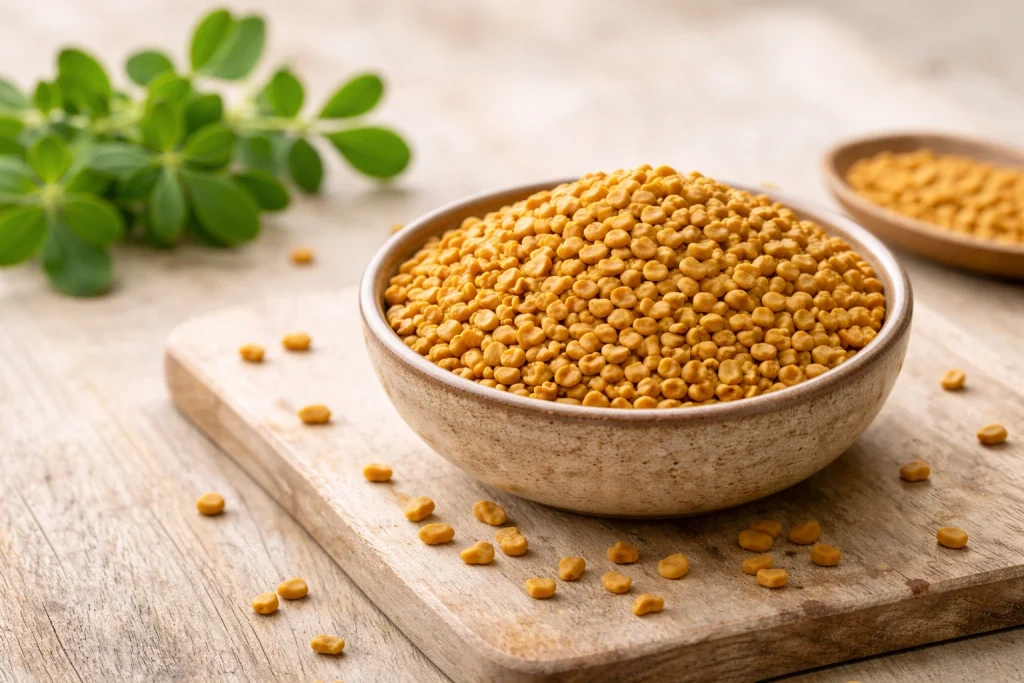
Methi seeds are a familiar sight in Indian kitchens, even if they’re used sparingly. Slightly bitter with a mild nutty note, they add depth without overwhelming a dish. You’ll find them sizzling in hot oil at the start of a curry, add to spice blends, or pickles. Though used sparingly, fenugreek or methi seeds bring depth and balance to everyday cooking. From aromatic tempering to traditional pickles, their versatility makes them an essential ingredient across cuisines.
The Role of Methi Seeds in Indian Cooking
Unlike fresh methi leaves, which bring a green, mildly sweet bitterness, methi seeds have a sharper and more concentrated flavour. They are rarely used raw. Instead, they are toasted, fried, soaked, or ground to soften their bitterness and release their aroma. When handled well, methi seeds enhance dishes without overpowering them.
- Methi Seeds in Tempering (Tadka)
One of the most common uses of fenugreek methi seeds is in tempering. Added to hot oil along with mustard seeds or cumin, methi seeds slowly darken and release a nutty fragrance. This technique is widely used in vegetable stir-fries, lentil dishes, and South Indian preparations. In dishes like aloo sabzi, cabbage poriyal, or simple dal, a few methi seeds in the tadka add a subtle bitterness that balances earthy flavours. - A Key Ingredient in Indian Pickles
Methi seeds are an essential ingredient in many traditional Indian pickles. They are often dry-roasted and coarsely ground before being mixed with spices and oil. This preparation gives pickles a deeper flavour and helps mellow sharp notes from mustard, chilli, and raw mango. In regional recipes, methi seeds also act as a natural preservative. Their bitterness balances acidity and oiliness, helping pickles mature gracefully over time. Without methi, many classic pickle masalas would feel incomplete. - Used in Spice Blends and Powders
Methi seeds are an important component in several spice blends. They appear in sambar powder, curry powders, and regional masalas in small quantities. When roasted and ground, they lend a warm, slightly sweet undertone that rounds off strong spices. In home kitchens, methi seeds are sometimes ground with coriander, red chillies, and cumin to make fresh masalas for curries and gravies. - Sprouted and Soaked Uses
Beyond spices and pickles, methi seeds are also soaked or sprouted and used in cooking. Soaked seeds lose much of their bitterness and can be added to salads, sabzis, or doughs. Sprouted methi seeds are often lightly cooked with vegetables, lending texture and a gentle bite. This form is especially popular in simple, home-style cooking where flavour and nourishment go hand in hand. - Regional Variations Across India
Different regions use methi seeds in unique ways. In Gujarati cuisine, they often appear in kadhi and vegetable dishes. South Indian recipes use them sparingly in sambars and chutneys. In North Indian kitchens, methi seeds is added to pickles, curries, and slow-cooked vegetables. Despite regional differences, the purpose remains the same, to add balance, depth, and a distinctive edge.
Conclusion
Methi seeds are one of those ingredients that make food taste better. A small pinch can change how a dish comes together, adding that familiar, slightly bitter note many Indian recipes. From everyday tadkas to homemade pickles, they show up in more places than we realise. For regular cooking, having good quality methi seeds on hand matters. Sunrise Spices methi seeds help you achieve that familiar flavour right at home.
FAQS
1. What are the benefits of methi seeds?
Methi seeds are known to support digestion, help regulate blood sugar, and add natural fibre and nutrients to the diet.
2. Can I drink methi seeds water daily?
Yes, methi seeds water can be taken daily in moderation, preferably after soaking overnight.
3. What is the right quantity of methi seeds to use daily?
A small amount is enough; about half to one teaspoon a day works well for most people.