


















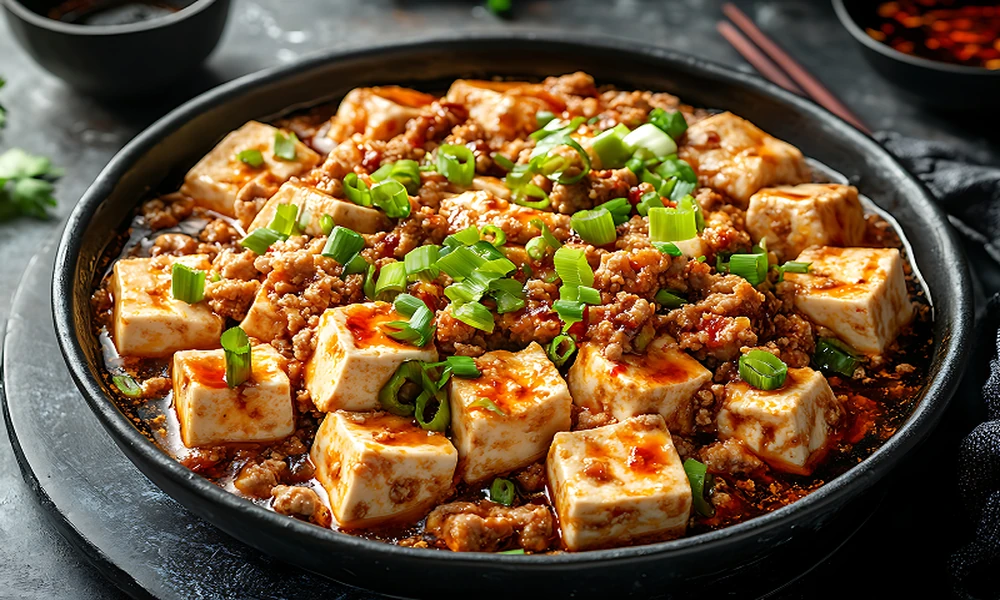
Key Highlights
- Japanese mapo tofu leans milder and sweeter than the original Sichuan version
- Doubanjiang and douchi form the flavour base most people can’t quite place
- Silken tofu and a careful simmer keep the texture soft instead of mushy
- The right balance of five ingredients is what makes the dish addictive rather than just spicy
Why This Bowl Is So Hard to Stop Eating
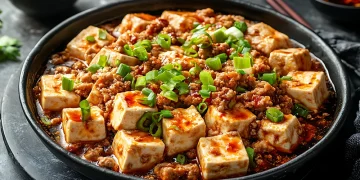
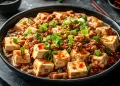
There’s a reason people order mapo tofu and then quietly order it again next time. It’s not just heat – plenty of spicy dishes don’t have this kind of pull. Something about the combination of savoury, funky, and slightly sweet keeps your chopsticks going back for one more bite, even after you’ve told yourself you’re full.
Japanese mapo tofu in particular has its own thing going on. It softens some of the sharper Sichuan edges without losing the depth, which is probably why it’s become such a comfort food staple outside China too. Once you know what’s actually in the pan, that addictive quality stops being a mystery – and once you’ve had a properly made version at a Michelin Chinese restaurant in Singapore, the home-cooked stuff starts to feel like a rough draft.
It Starts With the Sauce Base
Doubanjiang, a fermented broad bean and chilli paste, is doing most of the heavy lifting here. It brings heat, sure, but also this deep umami funk that plain chilli oil just can’t replicate on its own. Without it, mapo tofu is basically just spicy tofu soup – fine, but forgettable.
Douchi, fermented black beans, works alongside it to round things out with a saltier, almost smoky note. Japanese mapo tofu tends to use a gentler ratio of both compared to the traditional Sichuan version, which softens the overall punch without losing that signature savoury backbone people keep coming back for.
The Five Ingredients Doing All the Work
Here’s what’s actually going into that bowl, beyond just “chilli and tofu”:
- Doubanjiang – the fermented chilli bean paste that builds the base heat and umami
- Douchi – fermented black beans adding a salty, smoky depth
- Silken tofu – soft enough to soak up flavour without falling apart in the pan
- Minced pork – browned first for a savoury contrast to the sauce
- Sichuan peppercorn – used more sparingly in the Japanese version, for that background tingle rather than a full numbing hit
None of these ingredients does much on its own. It’s really the ratio between them that decides whether a bowl tastes balanced or just aggressively spicy – and getting that ratio right consistently is usually what separates a home attempt from what a Michelin Chinese restaurant in Singapore sends out night after night.
Getting the Texture Right Matters Just as Much
Flavour aside, texture is where a lot of home attempts fall apart – literally. Silken tofu breaks easily, so it needs to go in toward the end and get a gentle simmer rather than a vigorous stir. Rushing this step is the fastest way to end up with tofu mush instead of distinct, silky cubes.
The sauce also needs time to thicken slightly before the tofu goes in, usually with a light cornstarch slurry. Getting that consistency right is honestly more about patience than skill, which is part of why Japanese mapo tofu tastes so different depending on who’s cooking it.
Why It’s Worth Trying at a Proper Kitchen
You can make a decent version at home, but there’s a noticeable gap between that and what comes out of a Michelin Chinese restaurant in Singapore that’s spent years dialling in the ratios. Small differences in fermentation time, pork quality, and heat control add up to something a home stove often can’t quite replicate.
| What to Look For | Why It Matters |
| Glossy, not oily, sauce | Signals proper thickening technique |
| Distinct tofu cubes | Shows careful handling during cooking |
| Layered heat, not just spice | Comes from balanced doubanjiang and douchi |
| Visible peppercorn specks | Confirms it wasn’t skipped for convenience |
A proper kitchen tends to get all four of these right consistently, which is honestly half the reason people keep coming back.
One Bowl, A Lot Going On
Mapo tofu looks simple on the surface, but there’s real technique hiding under that red sauce. Five ingredients, one careful simmer, and a lot of small decisions about ratio and timing are what separate the addictive version from the merely spicy one. None of it is flashy, which is probably why it’s easy to overlook until you taste a bowl done properly, and the fuss suddenly makes sense.
Contact Chen’s to book a table and taste what a properly balanced bowl actually tastes like.